





Tottenham Hotspur continues to solidify its reputation as a global brand, maintaining financial stability even as performances on the pitch remain inconsistent.
Under chairman Daniel Levy’s leadership, Spurs have emerged as one of the best-managed clubs financially, but their commercial success has not always translated into footballing triumphs.
Levy recently unveiled Tottenham’s financial results for the year ending June 30, 2024, revealing a slight drop in revenue from £549.6 million in 2023 to £528.2 million.
The decline is primarily attributed to the club’s absence from European competition and a reduced number of home fixtures compared to the previous season.
Despite the financial dip, the Spurs chairman remains optimistic, particularly about the club’s Europa League campaign, which presents a pathway to both silverware and Champions League qualification—a vital boost both competitively and financially.
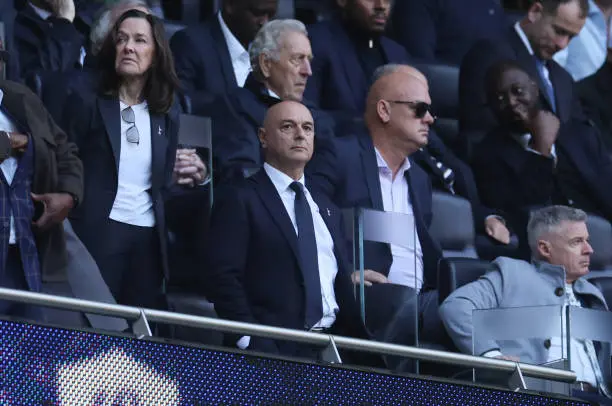
Tottenham chairman Daniel Levy stresses importance of Europa League success
With Tottenham currently struggling in the Premier League, sitting 14th in the table, Levy has highlighted the crucial role of European success in the club’s ambitions.
The Spurs chairman also addressed the club’s transfer strategy, revealing that since the opening of Tottenham Hotspur Stadium in 2019, the club has invested over £700 million in player recruitment.
Despite Spurs being ranked among the richest clubs in world football, he warned that sustainable spending is essential to safeguarding the club’s long-term future.
Beyond football-related revenue, Tottenham’s off-field ventures, including events at their world-class stadium, continue to play a crucial role in maintaining financial stability.
Issuing the statement on the official Tottenham website, he stated:
“As we announce our financial results for the year to 30 June 2024, we currently find ourselves in 14th position in the Premier League, navigating what has been a highly challenging season on the pitch.”
“We are, however, in the quarter-finals of the UEFA Europa League. Winning this competition would see welcome silverware and mean qualification for the UEFA Champions League. We must do everything we can to support the team in these final key stages.”
“Since opening our new stadium in April 2019, we have invested over £700million net in player acquisitions. Recruitment remains a key focus, and we must ensure that we make smart purchases within our financial means.”
The need for the club to balance between footballing and financial ambition
While footballing success remains a priority, Tottenham’s off-field ventures continue to play a significant role in their financial strategy.
Events hosted at the state-of-the-art Tottenham Hotspur Stadium—including NFL games, concerts, and other major sporting spectacles—provide a consistent source of revenue, ensuring the club remains financially resilient.
As the longest-serving chairman in the Premier League, Levy has overseen Tottenham’s evolution into a commercial powerhouse, spearheading stadium development and financial growth while frequently reshuffling the managerial deck in pursuit of silverware.
However, with fans growing increasingly frustrated over the club’s inconsistency, the pressure is mounting for Tottenham to translate their business acumen into tangible footballing achievements.
I just wanted to address Levy’s recent message to Tottenham fans critical of his strict transfer spending and wage structure considering their financial stature as the 9th richest club in world football. Whilst he is quick to point out that Tottenham have spent a lot of money but will not overspend that may sound logical, however many of us question not only how the resources have been spent firstly in terms of buying players that have simple failed to elevate the clubs footballing ambitions. Then there is the notion that if you won’t pay top wages for the best talents then you are severly limiting the ability to bring top players and over a period of time become recognised for not having real ambition. I think every other top club recognises to attract the right players they need to pay the wages, and by bringing the best also increases the opportunity of increased revenue through increased success i.e. trophies and top competitions. The simple fact Levy has failed Spurs because he won’t truly address the problem by taking the risks to guarantee Tottenham climb that ladder. It seems not only hypocritical that whilst he won’t pay the players top level wages, he is by contrast quite happy to be the best paid club chairman in the whole premiership and many would argue that his inability to bring actual football success to a club that is massively underachieving does not merit the rewards he happily entertains for himself. Spurs fans simply want a change of philosophy which aims to deliver this success, and frankly Levy has proved he just doesn’t have it.